
How to Clean a Washing Machine — The Complete Step-by-Step Guide
If your laundry comes out of the washing machine smelling musty, or you have noticed a sour odor coming from inside the drum, the machine itself needs cleaning.
Knowing how to clean a washing machine properly takes about 30 to 45 minutes, costs almost nothing, and makes a noticeable difference in how clean your laundry actually comes out. This guide covers the full process for both front-load and top-load machines — because the cleaning method is different for each type.
Why Your Washing Machine Gets Dirty
Before getting into how to clean a washing machine, it helps to understand why it gets dirty in the first place. Four things cause the buildup inside most machines:
Detergent residue — using too much detergent, or using the wrong type for your machine, leaves a filmy residue on the drum, door seal, and dispenser tray that accumulates over weeks.
Fabric softener buildup — liquid fabric softener is one of the worst contributors to washer buildup. It leaves a waxy film inside the drum and dispenser that attracts and traps lint, bacteria, and mold spores.
Hard water mineral deposits — Denton, TX and most of Denton County are supplied with moderately hard water. According to the City of Denton Water Utilities, the local water supply has elevated calcium and magnesium levels. These minerals leave white or grey scale deposits on the drum and heating element over time.
Trapped moisture — front-load washing machines in particular trap moisture inside the door gasket and drum after every cycle. In a humid North Texas climate this creates ideal conditions for mold and mildew.
What You Need Before You Start
Gather everything before you begin so the cleaning process runs without interruption:
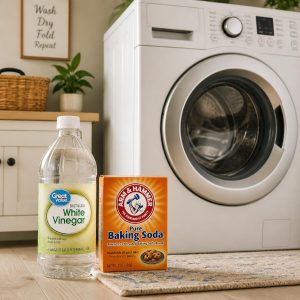
- White distilled vinegar — one to two cups
- Bicarbonate of soda (baking soda) — half a cup
- An old toothbrush or small scrubbing brush
- A microfibre cloth or soft towel
- A spray bottle
- Washing machine cleaning tablet (optional — brands like Affresh are widely available and effective for monthly maintenance)
Do not use bleach as your primary cleaner unless your machine manufacturer specifically recommends it. Bleach can damage rubber seals on front-loaders and does not remove mineral scale or detergent residue effectively.
How to Clean a Front-Load Washing Machine
Step 1 — Clean the Door Gasket
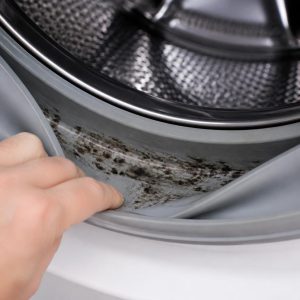
The rubber door seal is where mold grows first in any front-load washing machine. Pull the gasket away from the drum edge and look inside the fold — you will almost certainly find dark spots, lint, and debris trapped there.
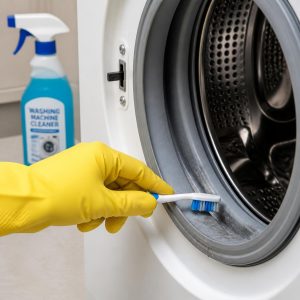
Spray white vinegar directly onto the gasket. Let it sit for five minutes. Then scrub firmly with an old toothbrush, working all the way around the inside of the fold. Use a damp cloth to wipe away the residue and mold debris. If the mold is severe, repeat the process.
For Denton homeowners: the combination of North Texas humidity and the city’s hard water makes gasket mold more common here than in drier climates. Wiping the gasket dry after every wash cycle significantly reduces the frequency with which this needs to be done.
Step 2 — Clean the Detergent Drawer
Pull the detergent drawer out completely — most front-loaders allow you to remove the drawer entirely by pressing a release tab inside the drawer compartment. Soak it in warm water for 10 minutes, then scrub all compartments with a toothbrush. Fabric softener residue in particular tends to become waxy and stubborn — warm water softens it before scrubbing.
Rinse the drawer thoroughly and leave it out to dry while you run the drum cleaning cycle. While the drawer is out, use a damp cloth to clean the inside of the drawer housing — mold often grows at the back of this cavity where the drawer normally sits.
Step 3 — Run a Hot Drum Cleaning Cycle
Add two cups of white vinegar directly to the drum — not to the detergent drawer. Select the hottest cycle available on your machine. On most front-loaders this will be the Sanitize, Tub Clean, or Cotton 90°C setting.
Start the cycle. The hot water and vinegar combination dissolves detergent residue, kills mold spores, and begins to break down mineral scale on the drum walls and heating element.
When this cycle finishes, add half a cup of bicarbonate of soda to the drum and run a second hot cycle. The bicarbonate of soda neutralizes any remaining vinegar odor and provides additional abrasive cleaning action on the drum interior.
If you are using an Affresh washing machine cleaning tablet instead of vinegar and bicarb, follow the manufacturer’s instructions — typically one tablet in the drum on a Tub Clean cycle.
Step 4 — Wipe Down the Drum and Leave the Door Open
After both cycles complete, use a dry microfibre cloth to wipe the inside of the drum. Pay attention to the holes in the drum wall where water enters — lint and scale accumulate around these.
Leave the door open for at least two hours after cleaning to allow the drum and gasket to dry completely. This is the single most effective habit for preventing mold returning between cleaning sessions.
Cleaning the Drain Pump Filter
The drain pump filter catches coins, hair clips, buttons, and lint that the drain pump would otherwise have to force through. When it becomes blocked, your machine may stop draining, leave clothes wetter than normal, or display a drain error code.
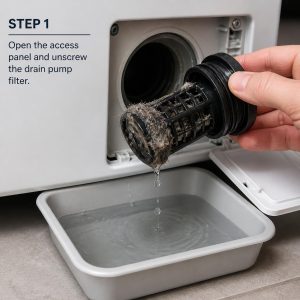
The filter is located behind a small panel at the bottom front of most front-load machines. Place a shallow tray under the panel before opening it — there will be residual water inside.
Unscrew the filter cap slowly, allowing the water to drain into the tray. Remove the filter, clear any debris from it, and rinse it under the faucet. Refit it securely. Check and clean this filter every three months.
When Cleaning Is Not Enough — Signs Your Washing Machine Needs a Repair
Your machine is still not draining after you have cleaned the filter. A blocked filter is the most common drain cause — but if you have cleaned it and the machine still does not drain, the drain pump motor itself may have failed. This is a common washing machine repair that our technicians resolve regularly across Denton and Denton County.
If your washing machine has a fault that goes beyond cleaning — or if cleaning has revealed that the machine has a mechanical issue that needs professional attention — Denton Repair Services provides same-day washing machine repair in Denton TX for all major brands including Whirlpool, LG, Samsung, GE, Maytag, Bosch, and Kenmore.
We serve homeowners, landlords, and rental property managers across Denton County and North Texas. Our certified technicians cover every community in the region including Flower Mound, Lewisville, Frisco, Plano, McKinney, Carrollton, Richardson, Grapevine, Southlake, Colleyville, and Gainesville.
Local Note for Denton, TX Homeowners
If you live in Denton or anywhere in Denton County, the hard water supplied by the city water system makes monthly washing machine cleaning more important than in softer-water areas. The elevated mineral content in Denton’s water supply means scale builds up inside the drum, heating element, and pump faster than the national average. Running a vinegar cleaning cycle once a month rather than every six weeks is the right frequency for most Denton households.
The same applies for homeowners in Lewisville, Flower Mound, and Corinth — all served by water with similar hardness levels. If you live in Frisco or Plano, which draw from different municipal supply systems, monthly cleaning is still recommended given the North Texas climate and the impact of summer humidity on front-loader mold growth.
Summary — How to Clean a Washing Machine
| Step | Front-Load | Top-Load |
|---|---|---|
| 1 | Clean door gasket with vinegar + toothbrush | Run hot fill, add vinegar + bicarb, soak 30 mins |
| 2 | Remove and soak detergent drawer | Wipe lid, rim, and underside |
| 3 | Run hot cycle with 2 cups vinegar | Scrub agitator with toothbrush |
| 4 | Run second cycle with ½ cup bicarb | Clean detergent and softener dispensers |
| 5 | Wipe drum, leave door open to dry | Run rinse cycle, wipe drum, leave lid open |
| Monthly extra | Clean drain pump filter | Check and clean filter if accessible |
Cleaning your washing machine once a month takes less than an hour and keeps it running efficiently, smelling fresh, and washing clothes properly. The two most important habits are leaving the door open after every wash and using the right amount of HE detergent for your machine type.
Related reading on our blog: Washing Machine Not Draining? Here Is Why | How to Wash Shoes in a Washing Machine | Repair or Replace — How to Decide
Professional service: Washing Machine Repair Denton TX | Refrigerator Repair Denton TX | Dishwasher Repair Denton TX